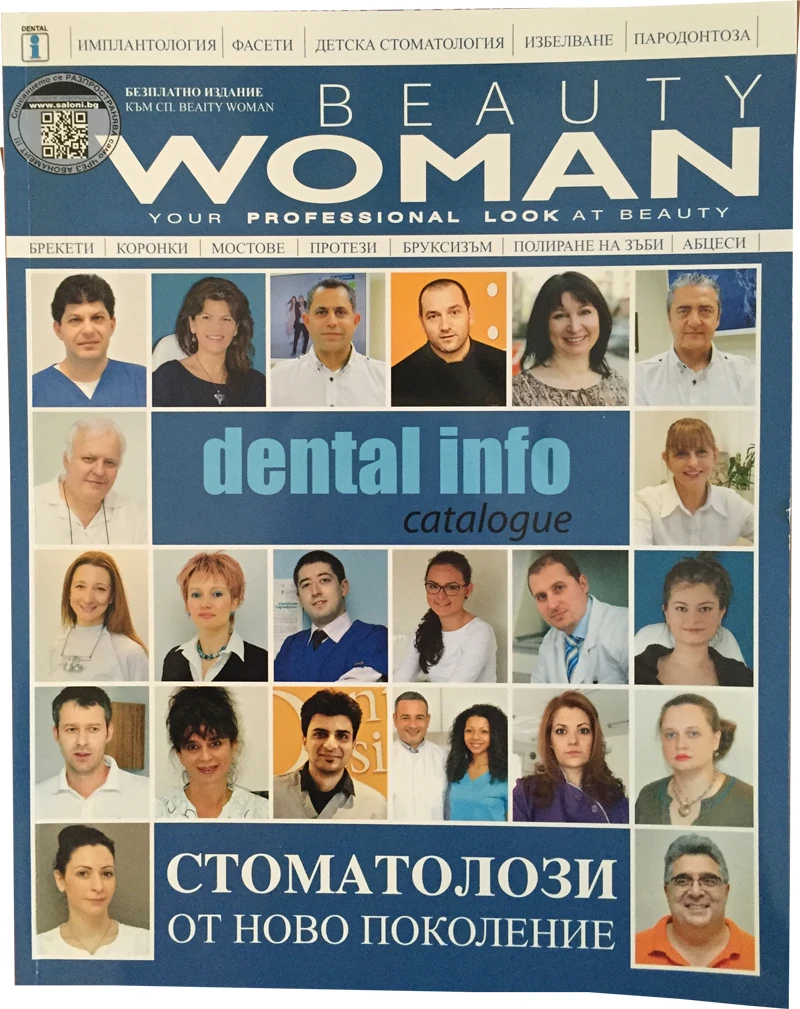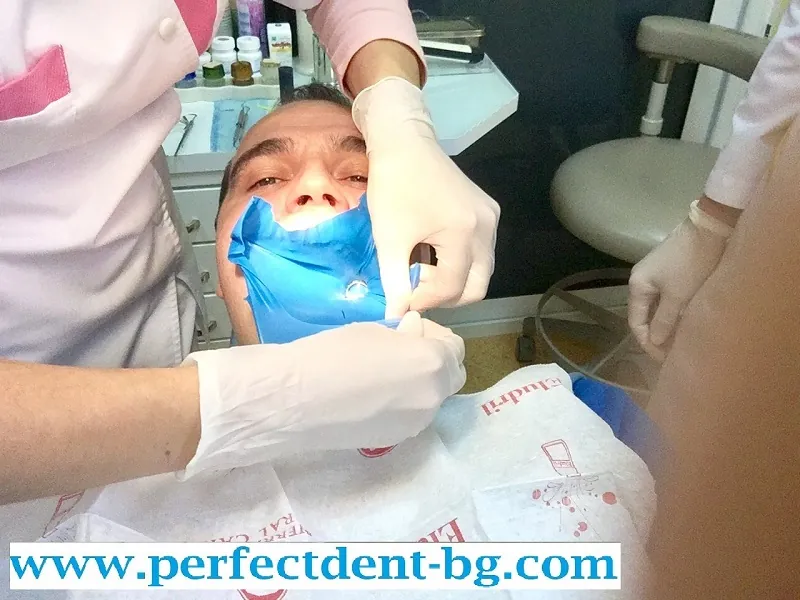
A rubber dam, or dental dam, is a square sheet that dentists use most often for fillings and root canal treatment. It was first introduced more than 140 years ago: in 1864 Dr Brauman punched a hole in a rubber sheet to isolate a lower molar. Since then the rubber dam has improved dentistry in many ways: it gives a dry field and better access, improves visibility, and adds to the patient's comfort and to infection control.
Most dams are made of latex. Some dentists jokingly call the dam a special raincoat for the tooth, because the sheet keeps it away from saliva and other fluids in the mouth, so it stays completely dry. The sheets come in many colours and flavours, which makes them easy and pleasant for the patient.
One or more holes are punched in the sheet with a special punch, and the sheet is then stretched on a metal or plastic frame that keeps it taut and makes it easier to place in the mouth. Special metal clips, called clamps, or silicone cords hold it on the teeth so that it does not slip. The clamp goes on the tooth being treated or next to it, depending on the procedure. The dam is used for fillings and direct aesthetic restorations, for root canal treatment, and for cementing fibre posts, veneers, inlays and onlays.
Why use a rubber dam?
- It isolates the teeth from the bacteria in saliva. This matters a great deal in root canal treatment: bacteria from saliva can infect the canals, and that complicates the treatment.
- The mouth is protected from all the fluids and solutions used during treatment.
- Patients feel calmer, because they do not have to worry about where their tongue is.
- It prevents swallowing debris when teeth are cleaned, above all when old amalgam fillings are replaced.
- A patient with a strong gag reflex can relax: contact with the mouth is kept to a minimum, and so is the chance of triggering the reflex.
- The sheet protects the lips and cheeks from injury.
- It gives a dry field, which matters a great deal: modern materials for restoring teeth damaged by caries, and all aesthetic restorations, follow a protocol that needs dry teeth.
- It protects the patient from swallowing small instruments (most often during root canal treatment).
- It can shorten the visit, because it makes a barrier between the lips, tongue, cheeks, saliva and the working area, which makes the dentist's work easier.
Will I be able to breathe and swallow?
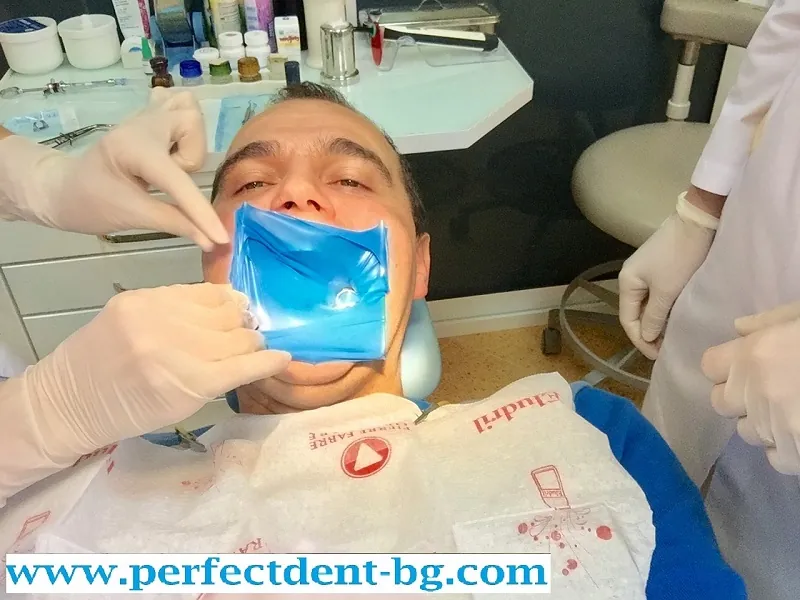
This is the most common worry among the patients of Dental Studio Perfect. Many people fear that with the sheet in their mouth they will not be able to breathe or swallow. That is not so: the sheet is stretched on a frame outside the mouth, which leaves plenty of room to breathe and does not get in the way of swallowing.
Why do some dentists still not use a rubber dam?
Some colleagues think that placing a dam takes too long, or that patients would not take to it. In fact the whole procedure takes 3–5 minutes, and most patients welcome it because they feel much more comfortable.
-
An article in the magazine Beauty Woman – dental info (the cover of the issue). -
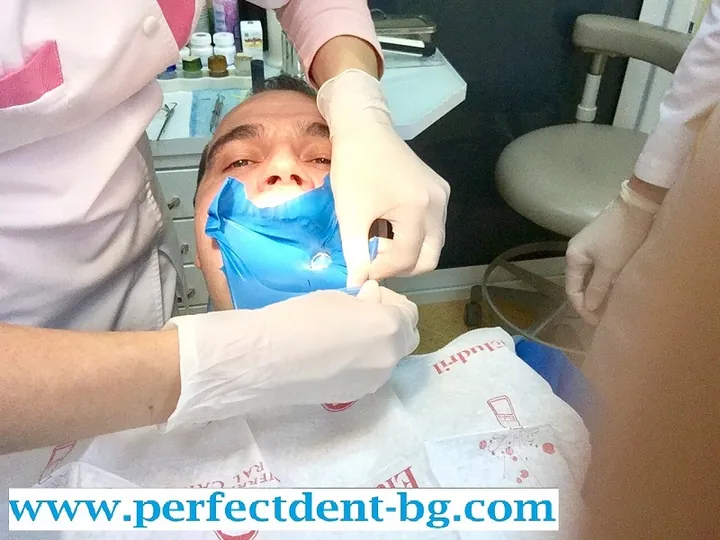
A rubber dam during treatment at the studio. -
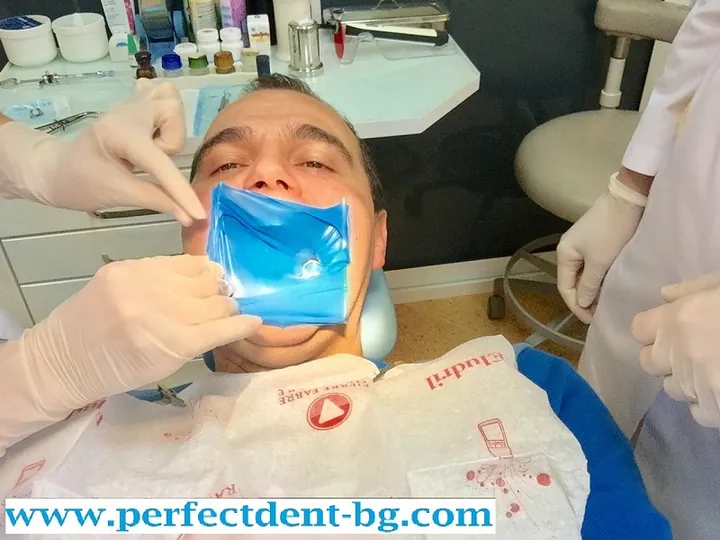
The sheet is stretched on a frame outside the mouth.